Here is a collection of the most frequently asked questions addressed to Carnivore Company regarding the supplementation of dried ancestral foods, with answers from our Scientific Committee edited by our reference nutritionist, Dr. Samuele Valentini .
INFORMATION NOTE: These questions and answers are constantly updated 💫
1. Taking liver and testicle/oyster capsules simultaneously for endurance sports: is it useful or are separate cycles better?
Question from Carlo:
Is it possible/useful to take liver and testicle/oyster capsules at the same time? I'm an endurance athlete and would like to know if it's worth taking them together or if I should follow separate cycles.
Dr. Valentini's response:
It depends on your goals. For those who practice endurance sports, a suggested protocol might be:
• First 3 months: 6 capsules of liver on rest days, 8 capsules of testicles on training days.
• Next 3 months: Only 8 tablets of testicles per day, stopping the liver.
• Final phase: Gradually reduce the testicles to avoid hormonal inhibitions: 6 tablets on training days for a month, then stop.
For joint recovery, 20 g of grass-fed collagen per day is recommended for 3 months.
2. Bull testicles vs. beef liver: which is better for high triglycerides and low cholesterol?
Question from Daniele:
Which product has the lowest cholesterol between testicles and liver? And which is best for those with high triglycerides?
Dr. Valentini's response:
The dietary cholesterol in the capsules is negligible and poorly absorbed, while high triglycerides are often linked to conditions such as insulin resistance. To improve the situation, it is recommended:
• Omega-3: 1 capsule per day of Pufagenics Forte.
• For athletes: Better are bull testicles , which now include dried oysters.
Both products are safe to integrate together.
3. Bull testicles and oysters for women over 40 and in menopause: are they suitable?
Question from Elena:
Are testicles and oysters suitable for women over 40 who are in menopause or approaching menopause with a natural decline in testosterone levels? Can I take them along with liver?
Dr. Valentini's response:
Yes, they are suitable. After 40, the decline in testosterone in women can affect energy, motivation, and muscle strength. Supplementing testicles and oysters can support the endocrine system. Suggested protocol:
• 3 months: 6 tablets of testicles + 6 tablets of liver per day.
• Subsequently: Gradually reduce the doses of the testicles, following an alternating cycle to maintain effectiveness.
4. Daily liver and testicle supplementation for training: dosage and long-term sustainability?
Question from Mario:
If I work out daily, can I take 6 caps of liver and 6-8 caps of testicles every day?
Dr. Valentini's response:
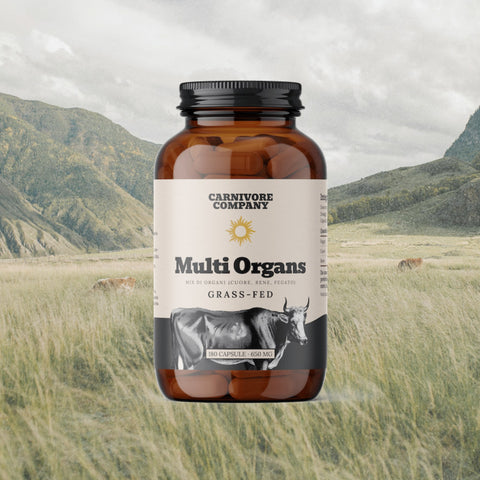
• Liver : Can be taken continuously, like a natural multivitamin.
• Bull Testicles with Oysters and Liver Grass Fed Testicles : After 3 months of continuous use, take a 1-month break to avoid habituation, gradually reducing in the third month (4-6 tablets on training days).
5. Protein and collagen protocol in a ketogenic diet: quantities and timing?
Question from Mary:
How to integrate protein and collagen into a ketogenic diet?
Dr. Valentini's response:
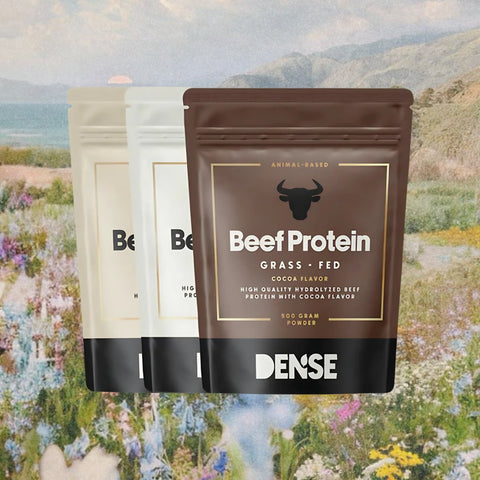
Grass-fed proteins are perfect for ketogenic diets, thanks to their low carb content. Suggested protocol:
• Protein : 20-40g per day, split between breakfast and post-workout.
• Collagen : 20 g per day, mixable with proteins.
6. Supplements for general well-being and debilitation (Multiple Sclerosis): which products?
Question from Seby:
I have multiple sclerosis and feel weak. What supplements do you recommend?
Dr. Valentini's response:
Suggested protocol for a natural and anti-inflammatory approach:
• 6 capsules of grass-fed liver in the morning.
• 6 capsules of testicles for 3 months, alternating them in the following months.
• Grass-fed protein in the morning (20-30 g).
• In cooking: Use tallow or ghee to reduce inflammation.
7. Weightlifting and low-carb supplements: which products and how to use them?
Question from Danilo:
I practice weightlifting and martial arts and follow a low-carb diet. How can I supplement your products?
Dr. Valentini's response:
• 8 tablets of testicles per day for 3 months, followed by 1 month off.
• 6 capsules of liver as a natural multivitamin.
• Consider a moderate intake of carbohydrates (fresh fruit, honey) to improve performance and recovery.
8. KETO DIET: How much protein do bull testicle capsules contain?
The amount of protein is in our opinion negligible in taking the bull testicles and liver capsules, but here is the calculation of the total as you asked.
Here is the text without the formulas, with the direct results:
Take 8 capsules of Bull Testicles and 6 capsules of Grass-Fed Liver daily.
Here is the calculation of total daily protein:
Average protein values:
• Bull Testicles (Grass-Fed): 20%.
• Oysters: 10%.
• Liver (Grass-Fed): 20%.
Protein per serving:
1. Bull Testicles Serving (8 Capsules): 544 mg Protein.
2. Liver dose (6 capsules): 900 mg protein.
Bottom line: Supplementing with bull testicle capsules provides less than 1g of protein in a single dose, so it's not significant for your protein count. The testicle protection benefits of oysters lie in their micronutrients (zinc, selenium) and hormone optimization (it supports natural testosterone production).
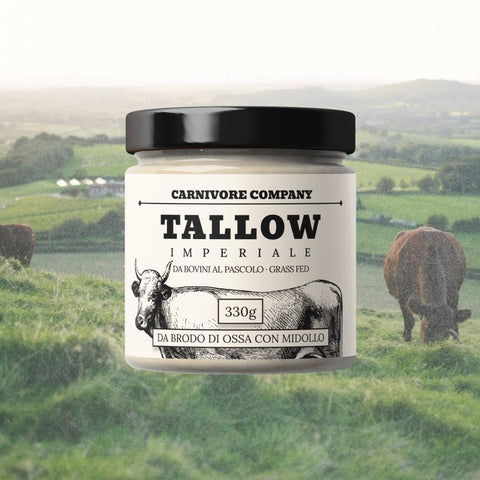
9. What micronutrients are contained in Imperial Tallow ?
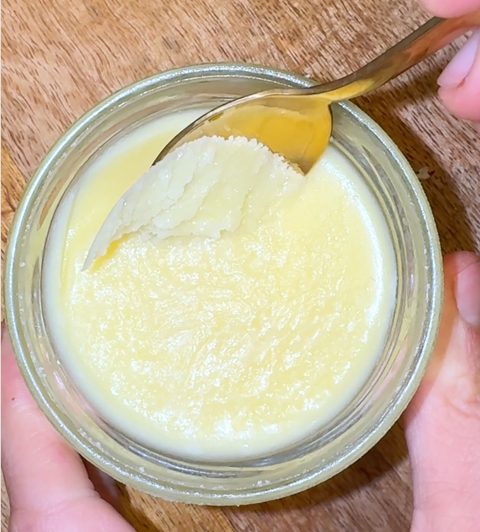
Imperial Tallow, made from beef tallow derived from bone broth with grass-fed beef marrow, has a nutritional profile rich in healthy fats, fat-soluble vitamins and essential minerals.
Macronutrients
- Made of 100% fat , no carbohydrates or proteins
- High content of saturated fatty acids (palmitic and stearic acid)
- Presence of monounsaturated fatty acids (oleic acid)
- Low in polyunsaturated fatty acids , especially in grass-fed cattle
Fat-soluble vitamins
- Vitamin A (Retinol) : Present in moderate amounts, it supports vision and the immune system
- Vitamin D (D3 - Cholecalciferol) : Supports bone health and immune function
- Vitamin E (Tocopherols) : Natural antioxidant that protects cells from oxidative stress
- Vitamin K2 (MK-4) : Essential for blood clotting and bone metabolism, most abundant in the fats of grass-fed animals
Minerals
- Iron : Contributes to the formation of red blood cells and the transport of oxygen
- Zinc : Important for the immune system and protein synthesis
- Phosphorus : Essential for bone health and energy production
- Magnesium and Calcium : Present in trace amounts, they support muscle and bone function
Benefits of grass-fed quality
Pasture-raised animals produce fats with a more favorable nutritional profile, characterized by:
- Higher levels of Omega-3 , benefits for the cardiovascular system
- Conjugated Linoleic Acid (CLA) , with antioxidant properties and potentially beneficial for body composition
9. What micronutrients are contained in Imperial Tallow ?
Nickel is present in varying amounts in almost all foods, including liver. However, the amount contained in 2-4 capsules per day is extremely small and considered negligible. This makes it safe to consume even for those with mild nickel sensitivity.
The capsules can be opened, but they are made of natural beef gelatin, which ensures better absorbability than common vegetable cellulose capsules.
The nutritional benefit of liver far outweighs the potential risk, precisely because of the minimal daily doses consumed.
Conclusion
Carnivore Company offers targeted supplement protocols aimed at improving health, athletic performance, and overall well-being through natural and ancestral solutions. For more details, visit our website or contact our team of experts.
Ancestral greetings,
Stefano from Carnivore Company 🐮